Energy Storage Batteries: From Policy-Driven to Economic Necessity, A Golden Track in the New Energy Era
Energy storage is shifting from policy-driven to an economic necessity. With the global demand soaring and AI data centers emerging as a new growth driver, leading enterprises are facing a severe shortage of core components. Sodium-ion batteries and solid-state batteries are ushering in an industrialization inflection point. Energy storage batteries are becoming one of the most certain high-quality tracks in the new energy field! This article focuses on analyzing the energy storage battery industry for research reference only.
I. Core Positioning:
In the past, energy storage was a mandatory configuration for new energy power stations, with compliance significance outweighing economic value. Now, Document No. 136 has ended mandatory energy storage allocation, and Document No. 114 has implemented a capacity electricity price mechanism, giving energy storage a stable "basic salary" for the first time. In addition, "computing-electricity synergy" was included in the government work report, making energy storage configuration for AI data centers a rigid demand.
In a word: Energy storage has entered a new cycle of high-quality growth.
II. Policy Turning Point: Two Documents Change the Logic
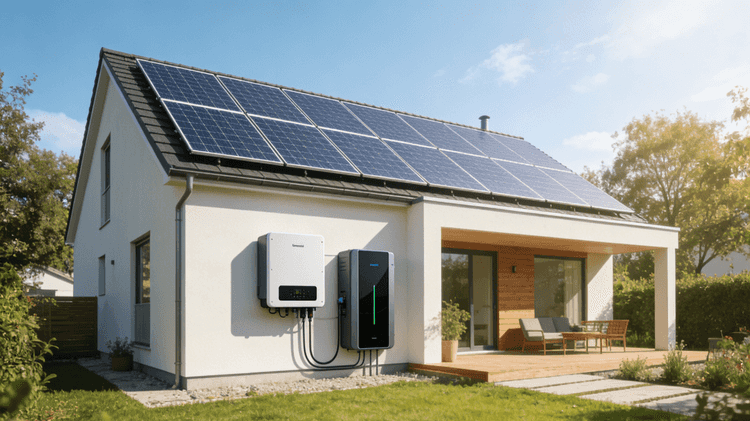
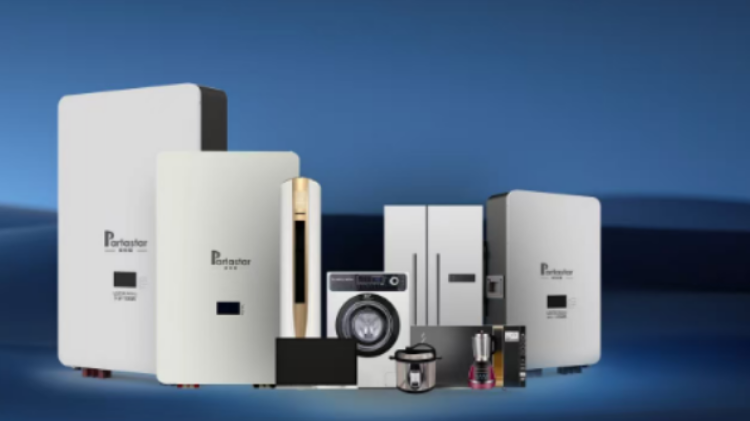
Document No. 136: Abolishing Mandatory Storage, Moving Towards Marketization In the past, new energy power stations had to be equipped with energy storage to connect to the grid, leading to a large number of low-quality, unprofitable energy storage projects. After the liberalization of Document No. 136, energy storage projects must win by economic efficiency — "whoever is cost-effective will configure, whoever is efficient will survive". For residential users, this market-oriented trend also promotes the upgrading of home energy storage products, such as Home storage all in one recommendation and Auto switch home storage for power cut, which are more in line with user needs and economic benefits.
Document No. 114: Capacity Electricity Price Mechanism, Providing "Basic Salary" for Energy Storage This is the first time at the national level that a capacity compensation mechanism has been established for independent energy storage. Energy storage power stations can now obtain stable capacity compensation income, equivalent to a "fixed monthly salary". Coupled with peak-valley arbitrage and auxiliary service income, the diversified profit model has been fully realized, and the project IRR has increased to 6-12%. This stable profit model also provides strong support for the development of residential energy storage, driving the popularity of products like Home stacked lithium battery storage and Expandable stacked home energy storage, which are favored by households for their scalability and stable performance.
Computing-Electricity Synergy: AI Data Centers, Becoming the Second Growth Pole of Energy Storage The 2026 government work report included "computing-electricity synergy" in new infrastructure for the first time. AI data centers are high-power-consuming and have high requirements, requiring supporting energy storage and green power. It is estimated that the energy storage demand of AI data centers in the United States alone will reach 37GWh in 2026. Domestically, the "East Digital West Computing" project is also advancing simultaneously, with demand releasing rapidly. While meeting the large-scale energy storage needs of data centers, the residential energy storage market is also booming, with products such as Wall-mounted solar storage all in one and 15kWh solar battery storage home China manufacturer gaining wide recognition.
Supporting Anti-Involution Policies: Regulating Competition Order and Restoring Industry Profitability Anti-involution regulatory policies issued by four departments have curbed low-price dumping, blind expansion, cracked down on inferior production capacity, improved corporate cash flow and profitability, and formed a combination with market-oriented policies to ensure the sound development of the industry. This has also created a good market environment for domestic home energy storage manufacturers, such as those providing Off grid solar battery storage for villa China factory and China factory wall mount solar battery for home, helping them enhance their core competitiveness.
III. Skyrocketing Demand: A Global Shortage of Core Components
The global market continues to grow at a high rate, with the Chinese market leading the growth. It is estimated that the installed capacity will reach 265 GWh in 2026.
Domestic Market: In 2025, China's new energy storage installed capacity exceeded 163GWh; in 2026, it is expected to jump to 265GWh, a year-on-year increase of more than 60%; in the medium and long term, the cumulative installed capacity is expected to reach 450.7GW by 2030, with a compound growth rate of 25.5% from 2026 to 2030. The domestic residential energy storage market is also growing rapidly, with Residential solar energy storage China factory direct and Balcony solar home battery storage China manufacturer continuously expanding their market share by virtue of cost advantages and product quality.
Overseas Market: United States: The ITC subsidy has been extended to 2034. Coupled with AI power demand, the installed capacity is expected to reach 80GWh in 2026; Europe: Inventory de-stocking has been completed, and large-scale energy storage will grow by 109% to 42GWh in 2026; Emerging markets (Middle East, Australia, Southeast Asia): The total growth in 2026 will reach 134% to 80GWh. Overseas demand for residential energy storage is also rising, driving the export of Chinese home energy storage products, including off-grid and wall-mounted types.
The most intuitive signal at present: Leading energy storage battery enterprises are fully booked with orders, resulting in a "shortage of core components", and the delivery time of some cells is as long as 6 months. In 2025, the domestic bidding volume increased by 72% year-on-year, and the growth rate remained high at the beginning of 2026. This tight supply situation also affects the residential energy storage market, making high-quality products from Chinese manufacturers more competitive.
IV. Technological Iteration, Multiple Routes Advancing Together
Energy storage batteries are experiencing a comprehensive upgrade from a single technical route to diversification, long service life, and high safety. Lithium iron phosphate occupies an absolute leading position with cost and safety advantages, while sodium-ion, solid-state, and flow batteries form important supplements in specific scenarios, which also provides technical support for the upgrading of home energy storage products.
1. Lithium Iron Phosphate: Large Cells + Liquid Cooling Become Mainstream Leading enterprises such as CATL and EVE Energy have launched energy storage-specific cells of more than 500Ah. The penetration rate of liquid cooling systems will exceed 60% in 2026, increasing system efficiency by 15% and extending cycle life by 20%. This technology is also applied to home energy storage products, such as Home stacked lithium battery storage and Expandable stacked home energy storage, improving their performance and service life.
2. Sodium-Ion Batteries: Cost Convergence with Lithium Batteries in 2027 Sodium resources are independently controllable, and the cost is declining rapidly. CATL plans to large-scale apply sodium-ion batteries in the energy storage field in 2026. It is expected that the cost of sodium-ion batteries will be equal to that of lithium batteries in 2027, which is suitable for mid-to-low-end energy storage and long-duration energy storage, and will also promote the upgrading of cost-effective home energy storage products.
3. Solid-State/Semi-Solid-State Batteries: First Landing in Energy Storage Scenarios Solid-state batteries solve the problem of thermal runaway, with significantly improved safety and cycle life. Enterprises such as Qingtao Energy and CATL have launched semi-solid-state energy storage cells, with small-batch supply from pilot lines. The energy storage scenario has lower requirements on energy density than power batteries, making it the first field where solid-state batteries are applied on a large scale. This technological breakthrough will also bring safer and more reliable options to home energy storage, such as wall-mounted and off-grid products.
4. Flow Batteries: Core of Long-Duration Energy Storage With a cycle life of more than 10,000 times, it is suitable for long-duration peak shaving of more than 4 hours. The cost of all-vanadium flow batteries continues to decline, and the industrialization inflection point has arrived.
In addition, AI + Energy Integration: Increasing Energy Storage Revenue by 10-20% AI algorithms accurately predict electricity prices and wind-solar output, optimize charging and discharging strategies, and directly increase the comprehensive revenue of power stations by 10%-20%. The in-depth integration of technology and operation further strengthens the economics of projects, and also helps optimize the operation efficiency of home energy storage systems.
V. Value Analysis of Three Core Links in the Industrial Chain
The energy storage battery industrial chain is divided into three core links: upstream resources and materials, midstream manufacturing, and downstream applications. The value distribution and competitive barriers show obvious gradient differentiation, and the transmission logic of each link directly determines the industry profitability and development rhythm. In the total cost structure of the energy storage system, upstream raw materials account for about 45%-50%, midstream cells and system integration account for about 40%-45%, and downstream applications and operation and maintenance account for about 5%-10%. This industrial chain structure also supports the stable supply of home energy storage products, with upstream materials ensuring product quality and midstream manufacturing ensuring production capacity, such as 15kWh solar battery storage home China manufacturer and Residential solar energy storage China factory direct relying on the complete industrial chain to gain advantages.
1. Upstream — Resources and Materials The upstream is a decisive link for the cost and performance of energy storage batteries, covering two major sectors: resource end and material end. Technical barriers and resource barriers build an industry moat, making it the most profitable link in the industrial chain. The stable supply of upstream resources also provides a guarantee for the mass production of home energy storage products.
2. Midstream — Manufacturing and Integration The midstream is the core transformation link of energy storage batteries from materials to products, covering three major sectors: cell manufacturing, system integration, and key components. It is a technology-intensive link in the industrial chain, and scale effect and customer certification build an industry moat. This link is crucial for home energy storage products, as it determines product quality and cost, such as China factory wall mount solar battery for home and Off grid solar battery storage for villa China factory relying on advanced manufacturing capabilities to improve product competitiveness.
3. Downstream — Application Scenarios The downstream is the terminal link for the value realization of energy storage batteries. Driven by both policies and the market, application scenarios continue to expand, extending from traditional new energy supporting to emerging fields such as computing-electricity synergy and long-duration peak shaving, becoming the core engine of industry growth. The residential energy storage market, as an important part of the downstream, is showing strong growth momentum, with products like Wall-mounted solar storage all in one and Balcony solar home battery storage China manufacturer meeting the diverse needs of households.
VI. Risk Tips
1. Policy Risk: The capacity electricity price mechanism is not implemented as expected, and the slow implementation of computing-electricity synergy policies affects demand release, which may also have an impact on the residential energy storage market; 2. Demand Risk: The global energy storage installed capacity and AI data center energy storage demand are lower than expected, leading to overcapacity; 3. Technical Risk: The industrialization progress of sodium-ion and solid-state batteries is slower than expected, and investment risks brought by technical route changes may affect the upgrading of home energy storage products; 4. Raw Material Risk: Sharp fluctuations in the prices of resources such as lithium and sodium squeeze corporate profit margins; 5. Competition Risk: Excessive industry expansion leads to a return to the pattern of low-price involution, which may affect the development of domestic home energy storage manufacturers; 6. Overseas Risk: Overseas trade barriers and changes in subsidy policies affect export demand, especially for Chinese home energy storage product exporters.
In summary, energy storage is becoming a golden track in new energy! 2026 is the year of market-oriented transformation and accelerated growth of the energy storage industry.
Policies have shifted from "mandatory" to "incentive", demand from "single" to "diversified", and technology from "following" to "leading". Energy storage batteries are no longer "accessories" of the new energy system, but core hardware of the new power system and digital economy.
In the next five years, the global energy storage market will have a compound growth rate of more than 25%, with China growing even faster. Driven by the triple resonance of energy transition, AI computing power explosion, and technological iteration, the energy storage battery industry is moving from extensive expansion to a new cycle of high-quality growth. The residential energy storage market, as an important part of the industry, will also usher in rapid development, with Home storage all in one recommendation, Auto switch home storage for power cut and other products becoming the new focus of market competition, and Chinese manufacturers will continue to play an important role in the global market with their cost and technology advantages.