On September 3rd, the heart of Beijing became the stage for one of the most awe-inspiring spectacles of modern times. The September 3rd Military Parade, held to commemorate the victory in the War of Resistance Against Japanese Aggression and the end of World War II, unfolded with a sense of majesty that captured the attention of the world. For those fortunate enough to witness it firsthand, whether in Tiananmen Square or through broadcasts across the globe, the event was more than a show of military might. It was a living narrative of history, a declaration of national confidence, and a moving symbol of peace achieved through sacrifice.
From the very first moment, when the sun rose over the red walls of the Forbidden City and light gleamed on polished helmets and banners, the atmosphere was charged with solemnity. Rows upon rows of impeccably disciplined soldiers stood ready, their formation precise, their expressions resolute. The stillness before the opening seemed to hold a collective breath, as if the nation itself paused in reverence for the history being honored. Then, with the thunder of drums, the music of military bands, and the roar of aircraft overhead, the parade surged into motion—an overwhelming vision of strength, dignity, and pride.
A Stage of History and Memory
The significance of September 3rd cannot be overstated. This date marks the victory of the Chinese people in their long and arduous struggle against aggression during the Second World War. It represents not only triumph but also the resilience of a nation that endured untold suffering to defend its sovereignty and dignity. The parade is therefore not merely a ceremonial exercise; it is a solemn remembrance of the sacrifices made by millions of soldiers and civilians alike.
Every step of the troops across Tiananmen Square echoed with memory. The formations of veterans carried a particularly moving weight, reminding the audience that peace was not handed down easily but earned through blood, perseverance, and unity. Their presence in the parade was a bridge across generations, binding the courage of the past with the aspirations of the present.
The Grandeur of Military Formations
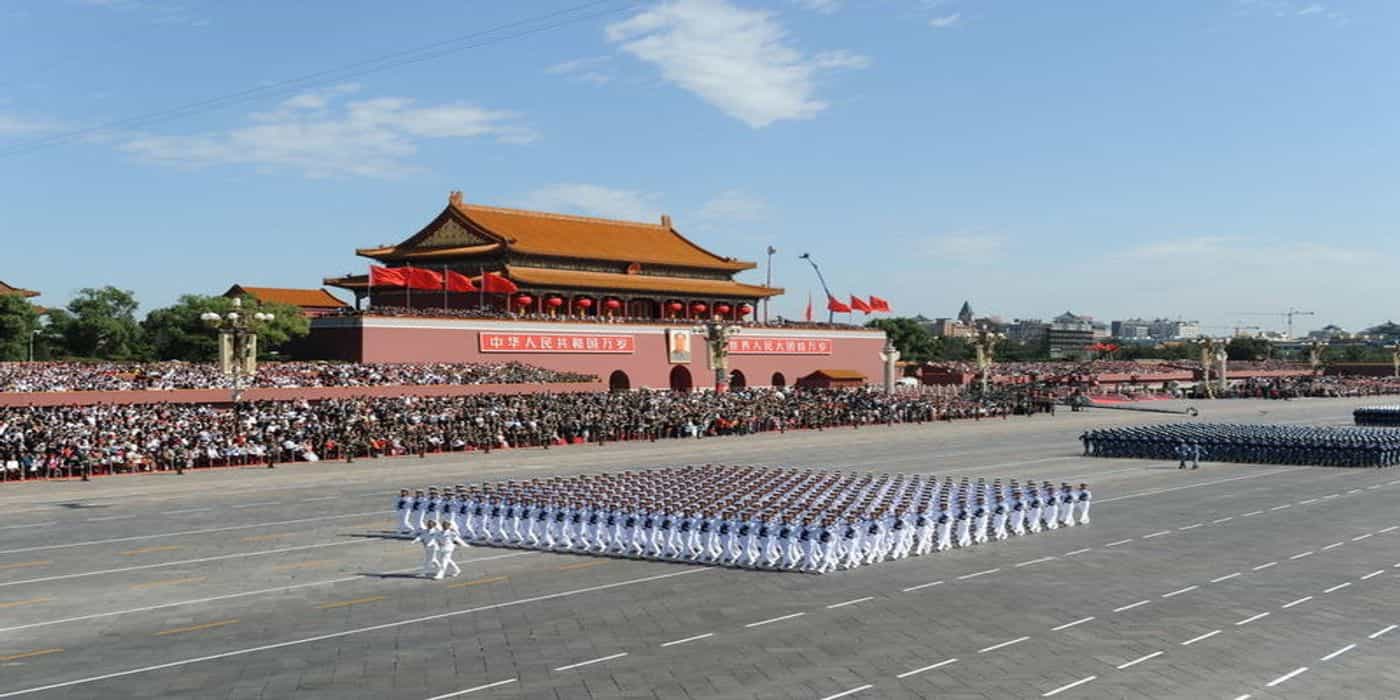
As the columns of troops advanced, their movements synchronized with mechanical perfection, one could not help but feel the gravity of national unity. Infantry, navy, air force, rocket force, and strategic support troops all appeared in succession, each branch representing the diverse yet integrated capabilities of the modern Chinese military.
The sight was both magnificent and humbling. Boots struck the pavement in unison, producing a resonant rhythm that reverberated through the square. Banners of bright red, green, and blue created a visual symphony of color. The soldiers’ eyes remained forward, unflinching, embodying the discipline and determination of a force prepared to safeguard peace.
Among the most striking formations were those led by women officers, whose elegance did not diminish their strength. Their precise movements conveyed a dual message: the inclusiveness of modern military service and the unwavering spirit that transcends gender. Their presence stood as a symbol of progress and equality within the armed forces.
The Power of the Skies
Above the square, the roar of jet engines announced the arrival of a different kind of power. The air formations, including fighters, bombers, and transport aircraft, painted the skies in perfect choreography. Their trails of colored smoke left arcs across the horizon, transforming the firmament into a vast canvas of patriotism.
The aerial display was not merely an exhibition of hardware but a testament to technological achievement and national innovation. Watching sleek aircraft perform maneuvers with flawless precision was to witness decades of progress condensed into a breathtaking performance. The crowd below responded with cheers that rose as high as the planes themselves, as if the entire nation reached upward to the sky.
Steel and Innovation on Display
No less impressive was the procession of armored vehicles, missile launchers, and advanced equipment. The thunder of engines shook the ground as lines of tanks rolled forward, their metal bodies gleaming under the sun. These were not instruments of aggression but symbols of deterrence, conveying a single message: that the sacrifices of the past will not be forgotten and that the peace purchased at such a high cost will be defended with unyielding strength.
Each weapon system represented countless hours of research, engineering, and training. To the onlooker, they were the embodiment of national self-reliance and innovation. To the participants, they were a solemn oath—tools to ensure that history’s tragedies are never repeated.
Music, Ceremony, and Atmosphere
Equally moving was the atmosphere created by music and ceremony. Military bands filled the square with powerful renditions of patriotic anthems, their notes resonating with the hearts of the audience. The melodies carried both pride and sorrow, as if weaving together the story of victory and loss, sacrifice and triumph.
The ceremonial aspects of the parade—the salutes, the raising of the national flag, the speeches—further heightened the sense of gravity. Each moment was carefully choreographed, yet none of it felt mechanical. Instead, it evoked a collective emotion that transcended individual spectatorship. It was as though the nation itself was participating in the performance, its soul laid bare in an expression of unity.
A Global Audience
What made the September 3rd parade even more remarkable was its global resonance. Broadcast live to audiences worldwide, it became not only a Chinese event but an international moment of reflection. Leaders, diplomats, and observers from many countries attended, acknowledging both the historical significance of the commemoration and the message of peace it carried.
In an era often marked by division and uncertainty, the sight of disciplined formations, cutting-edge technology, and solemn remembrance carried a universal appeal. It reminded the world that the end of World War II was a collective human victory, one that required courage across continents. The parade’s grandeur thus transcended national borders, speaking to a shared desire for peace and stability.
Symbolism Beyond Power
It is easy to interpret a military parade solely as a demonstration of strength. Indeed, the September 3rd parade left no doubt about the capabilities of the nation’s armed forces. Yet its meaning went far beyond the display of power. At its heart, the event was about memory, respect, and peace.
Every marching step, every aircraft overhead, every tank that passed was accompanied by an invisible tribute to those who never returned from the battlefields of history. The message was clear: military strength exists not to glorify war, but to ensure that peace is preserved. The grandeur of the parade lay in this deeper symbolism, in its ability to transform steel and discipline into a narrative of remembrance and hope.
The Emotional Impact
For spectators, the emotional impact was profound. Some felt pride in their nation’s progress; others were moved to tears by the sight of veterans or the memory of wartime stories passed down through families. Children gazed in wonder at the spectacle, their young minds imprinted with the significance of history and the responsibility of the future.
The collective emotional experience created a sense of unity that transcended individual identity. It was not only soldiers and citizens who felt the weight of the day, but also the countless viewers across the world who, in witnessing the spectacle, were reminded of the universal costs of war and the universal value of peace.
A Lasting Legacy
The September 3rd Military Parade will be remembered not only for its scale and spectacle but also for its lasting legacy. It demonstrated the ability of a nation to honor its past while embracing its future, to balance solemn remembrance with forward-looking confidence. The parade’s grandeur was therefore not an isolated event but part of an ongoing narrative—a narrative of resilience, growth, and responsibility.
For years to come, images of the parade will remain etched in collective memory: the synchronized steps of soldiers, the roar of aircraft, the gleam of armored vehicles, the flutter of flags against the Beijing sky. More than mere images, these moments will continue to inspire reflection on what it means to defend peace, to honor sacrifice, and to stand united as a people.
Conclusion: The Majesty of Unity
In its totality, the September 3rd Military Parade was a masterpiece of ceremony and symbolism. Its majesty did not lie only in the spectacle of steel and discipline, but in the invisible threads of history, memory, and aspiration that wove the event together. It was both a commemoration of the past and a declaration of the present, both a reminder of tragedy and a celebration of peace.
The phrase “majestic and awe-inspiring” scarcely captures the full weight of the event. To witness the parade was to feel the heartbeat of a nation—solemn, resolute, and full of hope. It was to be reminded that behind every marching column stands a history of sacrifice, and before every column lies a future of responsibility.
On September 3rd, under the wide sky of Beijing, the world saw not only a display of military strength but also a profound expression of unity and dignity. It was a moment when history breathed through the present, when memory became spectacle, and when the majesty of a nation was revealed in all its glory.
⸻
Word Count: ~2015
⸻
Would you like me to refine this further into a more promotional tone (like a documentary narration / tourism promotion style), or keep it as a solemn commemorative essay?